Off-grid Solar
Pure Sine Inverter
A pure sine inverter? Might sounds intimidating, a trigonometry term (sine wave) and electrical engineering terminology (inverter). A solar inverter is a must have, it converts the solar panel DC power into the AC power the household consumes with high waveform purity.
The Important features of the Off Grid Inverter
What are the important features of a pure sine inverter?
- The purity of the pure sine wave, also known as true sine wave is measured by THD (Total Harmonics Distortion. It needs to be bellow than 5% (rings a bell? High Fidelity sound systems also have a distortion limit. With musical ear you can hear the higher harmonics of the 60Hz sound when the inverter operate)
- Versatile mounting options
- Comparatively light weight (don’t expect a weight your small child can lift though…)
- One (or more) communication ports (so a controller or a PC can “talk and listen" to the inverter)
Buying a True Sine Wave Inverter
When you buy a pure sine wave inverter pay attention to the following:
- Wave form purity (fidelity)
- How close is the waveform to a sinewave?
- Efficiency
- How much of the DC input power is conveted to useful AC power?
- Current, voltage and power ratings
- What is the upper limits the manufacturer allows for input DC voltage, DC input current and AC output current and what is the rated power capability?
- Adaptabilty
- Can the solar inverter adapt to dynamic DC input voltage (source voltage - solar panels are known to change under dynamic conditions) and to the current consumed by the load (the combined AC current consumed by the household)
- Complying with standards
- Does the solar inverter comply with applicable standards?
True Sine Wave Inverter Cost Considerations
Cost is expected to be $0.8-1 per Watt AC.
I recommend buying the pure sine inverter from a one stop reliable solar store with a good reputation together with the other parts of the solar kit. The shop will provide you with system analysis and a good installation tips. The store will provide you a reliable after sale support
(dont forget - it is a small scale power plant you are building)
Application for Off Grid Power systems
The following installations, all of them are intended for off grid power generation include a pure sine inverter as an essential component.
Many pure sine inverters are also equipped with an AC outlet to feed a battery charger.
Technical Background
Some words on the pure sine inverter. When electrical power generation and distribution started by the end of the 19th century, two giants struggled about the right concept. Edison fought for Direct Current (DC), Tesla fought for Alternate Current (AC).
Eventually, Tesla won this battle, and the utility grid is AC. The main reason for that is distribution efficiency. Power is Voltage (Volts) times Current (Ampers), to deliver the same Power, if the Voltage is x times higher the current is x time lower. The utilities High Voltage Power lines run thousands of miles on wires. Wires resist the flow of current, this “friction” ends up in warming the wires. This is waste of energy (the utility is in the business of selling energy to customers and not to heat up wires…). The heat is proportional to the Current squared therefore low current/high voltage is what is good for long distance electrical power distribution. AC can be readily transformed (using a transformer) from low voltage to high voltage or from high voltage to low voltage. DC can not be transformed that way.
So, the utility generator generates AC electricity, having accurate sine wave shape, accurate frequency (60 Hz in the US) and pretty stable voltage. All residential appliances, electronic devices, lighting bulbs are built to work with the exact shape, frequency and voltage as specified and the utility is committed to supply compatible AC electricity.
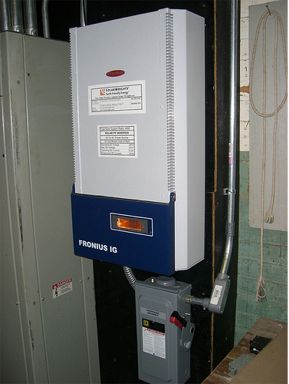 picture attributed to Aaron Gustafson
Solar panels generate DC. A pure sine inverter is needed to convert the DC to AC compatible with the shape, frequency and voltage to the standards.
Here lies the difference between on grid tie inverter and offgrid solar inverter. The grid tie inverter “senses” the grid and the grid “discipline” it, so compatibility is “a built in feature”. The Off-grid solar inverter must have “a self discipline” to be compatible (the appliances, electronics, lighting bulbs “don’t know” they are connected to an off-grid solar inverter, for them “life is as usual")
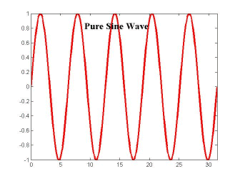
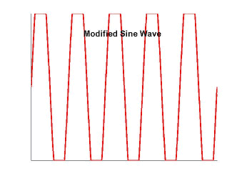
Here comes the term pure sine wave. See bellow two pictures side by side, of “pure sine wave" (left side) and “modified sine wave” (right side)
The utility grid supplies "pure sine wave" - this is what the home appliances "like" and need to get. The main difference between the pure sine wave inverter and the modified sine wave inverter is in the wave shape.
To be honest, some appliances might work on modified sine wave supplied by what is called a modified sine wave inverter. The difference is mainly in the THD value. The price is a bit cheaper, however - it is an headache to keep two different inverters and to keep two separate sets of wall outlets. Keep it simple, install one good pure sine wave inverter. It is a bit more expensive than the modified sine wave inverter but it makes your life simpler and your home appliances will live longer.
click to return from pure sine inverter page to off-grid solar page
click to view my Home Page