Residential Wind Power
Small Wind Turbines
Does it make sense to install a residential wind power system? It depends on: In general, home wind power makes more sense in rural area, for off grid homes and for ranches
Obviously, the location must enjoy “enough wind”. What is enough? Wind speed greater than 10Mph (4.4 m/sec) for more than 50% of the time can certainly qualify as having “enough wind”. Wind maps showing the relevant statistics are available, you need to google for the term “wind map” to find out the wind conditions in the location you want to install the wind turbine. If the location is remote from power lines, and you have already decided to stay off grid (not to be connected to the utility power lines) – a small to medium size wind turbine augmented by a solar power generator makes a lot of sense. Due to the fact that during dark hours the solar generator does not generate electricity and that there are periods of no wind - it is advised to have a backup diesel generator and/or deep cycle storage batteries.
A meaningful size residential wind power is installed on a tower that is at least 85 feet tall (25 meters) and some towers are as tall as150 feet (45 meters). The wind turbine must be located as far as possible from buildings and other ground objects to avoid air turbulence. This lead to the conclusion that the minimum required land size is one acre (4,000 square meters). This land size can be mostly found in rural areas and of course in ranches. Most suburban homes are squeezed into much smaller sites, therefore a full blown tall tower is out of question. Small, roof mounted wind turbine can be considered, however the power production capability is limited (to 600 Watts) and the homeowner must comply with local zoning laws, get permits, overcome possible neighbors’ objections, etc. If a group of neighbors can build on a community owned land a community wind turbine, it is a recommended solution.
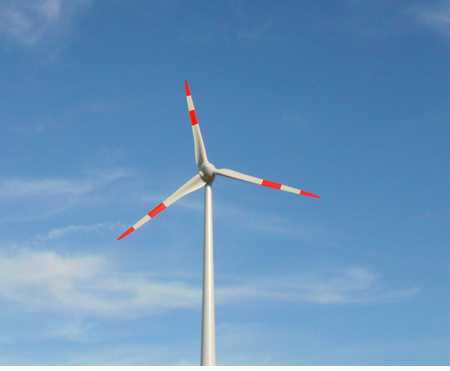
The cost items are the residential wind power turbine “off the box”, the tower, the DC to AC converter, electrical wiring and grounding, control electronics. To these you need to add shipping heavy staff!), tower stabilization and tower foundation, installation cost, zoning and permits. As a rule of thumb, $4,000 to $6,000 per 1kWatt production capacity is reasonable, of course you need to negotiate, best is to get a baseline proposal for a turnkey job from an authorized contractor. You are entitled to the 30% federal energy tax credit on the total investment. The turbine maintenance cost comprised of preventive maintenance, spare parts, down time cost and maintenance labor) are 3% to 5% of the new equipment cost; annual insurance contracts can be worked out. On the plus side, the wind turbine can save on electricity bills and if the size is right it can generate most of the household consumption.
You need to crunch the numbers to see how much time it will take you to pay back all the cost items, take into account the federal and state level tax incentives.
Residential wind power limitations and disadvantages
Noise: Wind turbines makes a specific hiss at low audio frequencies
Maintenance: The wind turbine tower needs periodic painting to protect from corrosion. The engine and gearbox require periodic maintenance
Insurance: Insuring the turbine from damage (that can be caused by high speed winds and by other causes) and insurance from collateral damages is a recurring expense that can not be ignored
More technical background on home wind power turbines
Click to view more on the residential wind power technical background; it is worthwhile to spend some more time in research
Click to view my home energy Home Page