Small Wind Turbine
A viable residential electricity generator
Small Wind TurbineBy small we mean smaller size, lighter weight and smaller electricity generation production capacity than the very big wind turbines in the wind farms. Least but not last, a cost that an average household can live with. - Electricity production capability less than 100 kW under nominal wind conditions. Home wind turbines are usually anywhere between 1 kW to 10 kW. (Typical size is 2 to 3 kW)
- Blades diameter ranges between 7 feet (2.1 meters) to 25 feet (7.5 meters)
- Weight from 35 lb (16 Kg) to 100 lb (45 Kg)
- Market price $3/watt to $6/Watt (prices are dropping due to automated mass production and increased competition)
Main Characteristics of smaller size wind turbines Direct drive (the turbine rotor directly drives the DC generator) for the very small turbines rather than geared mechanism for the larger unit. The turbine inherently produces DC (Direct Current), and conversion to AC (Alternate Current) is required. (The conversion is performed by an inverter). The inverter is sometimes integrated into the turbine.
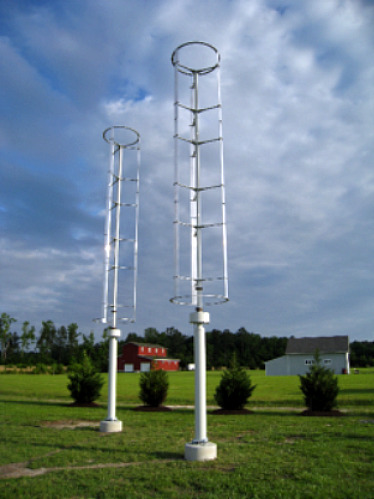
Caveat: the inverter for offgrid home is not the same as the grid connected inverter TypesThe type that is most popular is the HAWT (Horizontal Axis Wind Turbine). There is a trend now to promote VAWT (Vertical Axis Wind Turbine) claimed to be more suitable for sub-urban neighborhoods (view my link to roof mounted turbines) Practical considerationsAs a rule of thumb, the turbine must be elevated to at least 30 feet (7 meters) above the tallest object within a 500 feet radius (150 meters). So, one need a substantial land around the turbine and one need a wind turbine tower. Obviously, there should be enough wind in the region. One can judge by his experience or resort to wind maps available from the AWEA (American Wind Energy Association Site). The picture bellow is attributed to Windspire
Market DataResidential wind turbines is a growing market, US manufacturers achieved 50% of the world market share. The market grows rapidly, 90% annually. More data can be found in the AWEA (American Wind Energy Association Site)
return from small wind turbine page to the wind power page
click to view my Home Page
|