


|
The Solar TrackerThe idea behind adding a solar tracker to a residential solar electric power systems is to get more electricity power from the existing solar panels. Tracking the SunThe ultimate orientation for a given solar panel plane, if we want to get from it the maximum electrical power is perpendicular to the sun position. The most straight forward way to mount a solar panel is in a fixed direction. Since the sun apparently moves in the sky, having a fixed direction mounted panel is not the optimum. It is however a reasonable engineering compromise if site constraints and economical constraints are taken into account An obvious situation where the panel must be mounted in a particular direction is on a slant roof in general and if solar tiles are used in particular.
If the tracker mounted on a mast can be squeezed into the site, it is wise to calculate the added cost of the tracker versus the cost of bigger solar panels mounted on a fixed direction mount. With the recent drop in solar panels price the relative economic advantage of solar trackers is less than what it used to be A concentrator solar power system must have a tracker
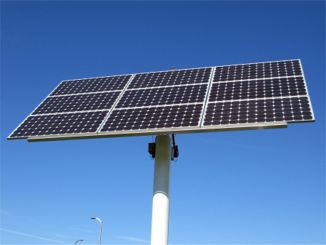
The solar tracker orients a solar photovoltaic panel to face the sun while tracking the sun position. Accuracy is not terribly important for orienting flat solar panels. Comparing to fixed mounted panels, the extra power generation comes into effect early in the morning and late in the afternoon (around noon time the fixed mounted panel is anyhow facing South where the sun is) Types of Solar TrackersThere are two types of trackers: the single axis tracker and the two (dual) axes tracker In a single axis tracker, the tracker tracks the sun in azimuth only; elevation can be changed manually according to the season (higher angle in the summer season) Most dual axis trackers can track in elevation and in azimuth; some have polar control Compared to a fixed mount panel, a single axis tracker increases annual electrical power production by around 25-30%, a dual axis tracker might add 5% on top of that. A single axis solar panel tracker is a good engineering compromise in most situations You probably ask yourself how does the motors in the tracker “know” where the sun is? There are two solutions to the riddle.
Practical Limitation to adding a Sun TrackerThe main practical reasons not to add sun trackers are:
Sun Trackers for Large Size Solar Power PlantsThe natural choice for large size plants is to use solar trackers in conjunction with concentrated solarSun trackers and domestic concentrated photovoltaicIt is expected that concentrated photovoltaic technologies, technologies that use optic lenses or optic mirrors to focus more sun radiation on a given photovoltaic panels will find their way to the domestic market. Right now these technologies are mainly used in large scale solar plants. When this happens,tracking the sun is almost a must, and another issue of cooling the solar panels will need a solution.
Related Solar Trackers Readingclick to view my page on Residential Solar Power Systems click to view my page on solar electric panels click to return from the solar tracker page to the solar system page click to view my home energy Home Page
Copyright 2009-2012 solar-energy-for-home.com |

This site for sale, affordable price
click to contact me for details



click to search the content on this site